
Showing posts with label ReadItTorial 2019. Show all posts
Showing posts with label ReadItTorial 2019. Show all posts
Thursday, 13 June 2019
"Time to put away such childish things" - But should we ever stop playing? Today's #ReadItTorial
Labels:
ReadItTorial 2019

Today's #ReadItTorial starts out with an admission. I've always hated that bloody thing, the thing pictured above. It's "Barbie's Malibu Beach House" - and C has had this huge plastic monstrosity for quite a long time. Normally it languishes in a cupboard, oft forgotten - but still kept in fairly good condition along with its insidiously waspish cohort of plastic Barbie dolls who sometimes live in it.
The reason for this image adorning a #ReadItTorial hasn't really got anything to do with Barbies, or plastic, or even Malibu beach houses. It's to do with play.
If you're a parent or guardian, and your kids are rapidly approaching that age where your only interaction with them is the odd cursory 'grunt' or 'Where's my charger?' when their phone's battery begins to run out or "What's the WIFI password for this horrible place you've dragged us to" then you might sympathise with today's subject.
We've begun to notice that the closer C gets to the age mentioned above, the more she's actually beginning to play with toys and activities she normally wouldn't have touched. Normally in her (extremely limited - thanks to school / homework) spare time you can probably guess what she likes to do more than anything else. But lately, rather than reaching for a book she's been delving into her toy cupboards and hauling all her toys out, playing with them for hours (in fact one rain-soaked weekend when we didn't manage to escape the house, she spent a good solid 7 hours playing with them - which is pretty unprecedented tbh).
Now and again we'd look in on her. She was so happily wrapped up in playing with her toys that she scarcely noticed our presence. As we were cleaning the house top-to-bottom we happily let her get on with it but later on we all had a chat about what was going on.
C almost burst into tears. She told us that in her class at school, hardly any of the girls still played with toys (or at least this is what they told her, I'm sure the reality is quite different). She felt that she was somehow being led towards an inevitability - that she would have to leave toys and playing behind, replacing these child-like pursuits with...what? Obsessing over fashion? Boys? Sticking daft pictures of their food on Instagram for "likes" ?
Both of us really didn't know how to react to this at first. It was heartbreaking to hear someone who wasn't even in their teens talking about the forced necessity to 'grow up'.
Playing is vitally important for kids though - so why does it get left behind as soon as they cross the boundary of their tenth year. Why does society feel that kids should devote their entire time to learning, education, more 'worthwhile' pursuits - shoving toys and playing to the back of the wardrobe, like that heartbreaking scene in "Toy Story 2" Where poor Jesse ends up dumped in a charity donation box by the side of the road (I still can't bear to watch that scene in polite company, it reduces me to a blubbing mess every single sodding time, like a great many Pixar movies I guess - but that one in particular nails what I'm trying to get across in this ReadItTorial).
We both vowed to make sure she can carry on enjoying playing. Peer pressure aside (and who the hell, quite frankly, has ever benefitted from anything forced on them by peer pressure anyway) I'd love to think that she just bucks the trend and carries on doing things she enjoys rather than feeling the necessity to fit in with everyone else.
Both my wife and I sat down and reasoned out when we both stopped playing. My wife thought it was probably in her early teens. Me...well, I was a geek who fell in love with videogames, Dungeons and Dragons and christ knows how many other 'worthless pursuits' - so I realised I actually never had stopped playing (is this something that boys tend to get away with more than girls? That's worthy of further debate). Do we count our hobbies as 'play'? If building lego kits counts as playing, then both my wife and I technically still do (and I still probably spend more time than I should playing videogames, though it's taken a bit of a back seat to drawing and doodling in recent years).
Why do we feel this stupid need to make our kids grow up quicker and leave all that stuff behind? I just can't understand it at all.

Thursday, 6 June 2019
The quest for "darker" children's books isn't just about the scares - This Week's #ReadItTorial
Labels:
ReadItTorial 2019
 |
| A master class in dark storytelling, "Black Dog" by Levi Pinfold |
Many well-meaning articles demonstrate the allure of sometimes dark and quite often grisly children's stories, with quite a few of the most celebrated 'darker' children's books hailing from non-english-speaking countries and creators. For example, the french in particular seem to be absolutely brilliant experts at designing and devising darker children's books without aiming straight for the 'jump scare' approach.
Perhaps one of the reasons for the clamouring renewed demands aimed at publishers to start indulging authors and illustrators who want to explore darker themes in children's books makes sense. After all, authors feel that they are in direct competition to some extent with the rise, and rise, and unchecked / unmonitored rise in darker content available to kids via other means - chiefly the internet, and in particular YouTube.
I doubt anyone involved in kidlit would want to see books arriving on shelves that were in any way derivative of the sort of horrible mind-bendingly inappropriate content viewable on YouTube and other social media outlets, but there's something to be said for the undercurrent bubbling under this fresh demand for darker material - the rise and rise of 'issues' books, particularly in picture book form, that feel each and every story must set out to set the world to right in some way.
Most book bloggers worth their salt will be able to reel off a huge list of 'dark' books that perform the neat balancing trick of having a darker look and feel about them, but masking off their moral message without jamming it in your face in the last quarter of the book (in the case of the book featured in our header image, "Black Dog" by Levi Pinfold, the subject of fear itself is dealt with deftly and beautifully, and the underlying message of Small's bravery is more subtly woven into the story than being the be all and end all of this darkly delicious tale).
I do take issue with the 'grown-up' way of looking at this issue. In some ways, it feels like creatives are merely prodding a red ants nest that threatens to explode. We often become carried away with the notion that the death of dark books is purely about agents and publishers 'nannying' kids away from anything that might play on their minds long after the covers are closed and the other covers are pulled up around their chins before bedtime. So let's be clear about what 'dark' actually means, and it definitely does not mean creating something that's going to scare the living pee out of a child to such an extent that it could actually put them off stories and books for good.
C has a rather neat approach to dark books - she enjoys them, and is at the moment firmly wrapped up in the brilliant world of "Lockwood and Co" by Jonathan Stroud...

Though Jonathan's books hark back to the heady days of the 70s and 80s when kids books really were a lot darker (as we've mentioned before, anyone who remembers all those Thames Methuen ghost anthologies will remember just how scary those books were), they are nonetheless compelling and demand to be read.
Kids don't always want to play it safe with books, but the best 'dark' books are never purely about scares - they're about a tight observation of what it actually is that works on a child's mind, and in some ways you can understand why agents and publishers steer clear of them.
Most kids spend a lot of their childhood scared or something. Whether it's an irrational fear of buttons, or a very real fear of heights, water, even birds, the majority of scary books usually aim for the easy way out, and end up pretty harmless and not dark or scary at all.
We tend to like books that leave a twist entirely up to the reader to interpret, and we rather like it when authors merely raise their eyebrows enigmatically if anyone tries to analyse their books to death in interviews and such. To my mind, there's not nearly enough mystery left in stories, possibly because internet pundits do love to neatly compartmentalize everything, including kids books.
Authors and illustrators who have kids or young relatives themselves have a ready resource to tap into in order to write authoritatively about fear and fear response. Most will also expertly draw on their own childhood memories of what scared them, and there's a very good chance that today's kids will also find those things scary too (for me, the opening credits to a TV show called "Armchair Thriller" still nudges at the back of my memory as something that traumatised me as a kid. Book wise it was nearly always stuff I read that I really had no business reading!)
We do have to draw a pretty firm line between the camps of "Dark & scary" and "traumatic" and the distant camp of "Bloody disturbing" (and in some of the articles wishing for a return to darker themes, a lot of the qualifying books brought up as an example really aren't dark or scary, but pretty flipping sick-making and harrowing if you boil them down to their constituent parts).
As I've said before in ReadItTorials, the children's picture book market in particular could do with taking off the safety stabilisers, perhaps letting kids experience the imbalanced wobble of fear from time to time. Going through books that have become "Book of the Week" faves over the years, we see books again and again that veer off the fluffy bunny path and dig deep into the twisted boughs of the dark scary woods instead, but as we all know, all kids are different - and children's books are finally beginning to realise that there's no 'one size fits all' approach when it comes to stories.
I have a huge amount of respect for authors who can not only write dark stuff successfully, but can find an agent or publisher who is willing to take a chance that their book will fly. Without them, we'd be left with 'safe' but perhaps a far less interesting and less diverse / rich book world to dive into.
Thursday, 23 May 2019
Musings on book blogging and how things change and evolve as time passes - a ReadItTorial
Labels:
Blogging,
ReadItTorial 2019

In some ways I think I'm quite envious of book bloggers out there who have kids younger than the age of 10, particularly those who have very young kids who are just beginning their reading journies. For them there's the opportunity to discover a book world anew - and to find books of their own that perhaps one day may rank alongside the all-hallowed 'classics' that you may hear other booky folk banging on about constantly (is there anyone left on the planet who hasn't read "The Tiger Who Came to Tea" or "The Very Hungry Caterpillar"?)
We've been doing this for nearly 10 years, and I think the key thing that book blogging has taught me (yes, even an old dog can learn new tricks) is that very few bloggers will ever transition to writing about books professionally. For some, it's because they have a zillion and one other things that may take up their time - as well as a boring day job that pays the bills perhaps.
For others it's because to take on the task as a paying gig might actually rob them of the sheer enjoyment of reading for pleasure. Speaking from the experience of once taking something I enjoyed doing as a hobby and turning it into a profession (web coding), I fell completely and irrevocably out of love with that thing when I had to devote every single working hour to it (though it would be hard to imagine ever getting to the point where writing about books, reading books or enthusing about books with like-minded folk would ever get tiresome, even if it was a day job).
For C, our book blogging joint effort has changed to a point where we're reaching a fork in the road that I would imagine many other book bloggers will eventually have to stop and take stock. One of our fave book bloggers has reached that fork in the road with her daughter, and though I'd imagine Mum might still carry on writing about books, her daughter is now also taking her own first steps into writing about them completely independently of Mum.
C and I used to joke about what the blog would be called if we did the same. "Read it, C" would be the obvious choice - or something entirely new. Perhaps it wouldn't even be a blog at all, as most tweens and teens are less interested in writing long boring reams of text about a particular book or book-related subject, but would be all over taking a pretty stylised photo of that book's cover, perhaps with some flowers next to it - or more likely an 'intelligent' looking selfie of them holding up the book in a predetermined bookish pose for their Instagram feed.
Blogging is evolving, and the perception of bloggers is changing a little too - perhaps too little, too late as more and more publishers understand the worth of word of mouth, the worth of real human opinions vs a couple of incoherent lines and a 5 star review on Amazon and how a nicely written blog or article can help push sales along in a none too insignificant way.
"Influencing" is a weird thing though and one I don't feel I'm entirely happy with. We both love the thought that books we've recommended to people are bought and enjoyed by others, who wouldn't love that - but when it changes into something else, ie you pushing something that your heart really isn't in but doing so because you feel you owe some kind of a debt to the publisher / author / illustrator really doesn't feel like it has any worth at all, and you would hope that most people would see through a blog post or article like that pretty much instantly. Yet I wonder if that does happen? (at this point I should categorically state that we've never been paid for any articles here with anything other than a free copy of a book, perhaps the odd tote bag or sweet treat but not cash money).
Monetising your blog might be easier than ever before but again it always felt like a step too far. Shoving a ton of banner ads and clickables onto the blog just to make a few coins feels a bit of a weird side-step away from the purpose of the blog - to share new books with people, and hope that they love them as much as we do (I'm repeating myself here but sincerely, aside from the awesomeness of being sent things to review, the real purpose of this blog is, and always was to talk about brilliant books).
I wonder how other long-term book bloggers are faring. I know quite a few who started around the same time we did who have kids around the same age (or older) than C who have already chosen one path or the other when they got to the fork in the road - as ever, hit me up on twitter @readitdaddy to share your experiences as I'd love to know what happened with you too.
Thursday, 16 May 2019
"What's all this shouting? We'll have no trouble here!" - When home turns into an instagram-unfriendly tween Warzone - a ReadItTorial
Labels:
ReadItTorial 2019
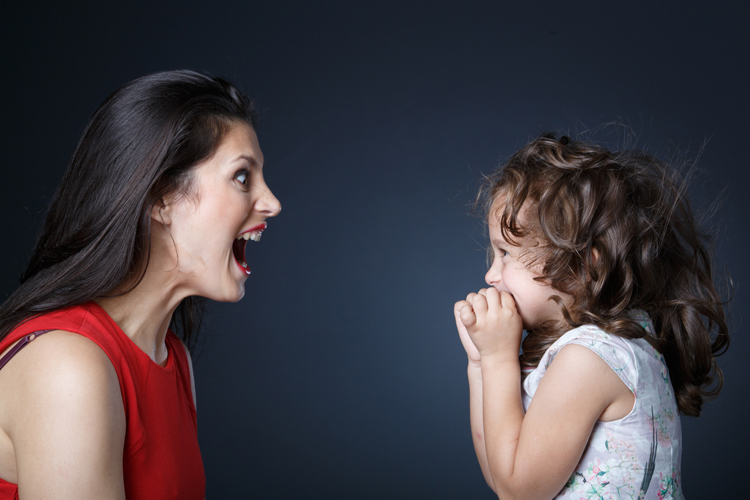
Forgive me for a bit of a parenting ramble this week for our #ReadItTorial. It's easy to come away from most parenting blogs or people's instagram feeds with a sense that folk live in some sort of weird idyllic Stepford-Wives style existence where everything's perfect, everything's calm and peaceful, squeaky clean and life is just too peachy for words.
Of course, the reality is usually different - and away from the tapping of keyboards as folk infest their social media presence with this idyllic pretend lifestyle, under the pretentious veneer there's a lot of mess, a hell of a lot of noise, a lot of shouting, and, at times, some truly spectacular arguments.
At ReadItDaddy Towers, these shouting matches erupt in microseconds and are usually about something so insignificant that looking back at the arguments you could almost cry at how trivial the element that caused the argument actually is. The end-result is the same though, everyone involved feel utterly wretched afterwards.
Anyone who has children know that if their kids are particularly strong-willed they're like miniature terminator robots. They can't be reasoned with. They can't be bargained with. And they absolutely WILL NOT STOP until they've had a spectacular meltdown. As quickly as these arguments erupt, they're never over and done with that quickly - and sometimes after the millionth repeat of a particular phrase there's often no choice but to step the hell away.
Last week's biggest bust-up revolved around (of all the damned stupid things) Little Miss deciding that for her school class photograph she wanted "Ariel hair" when her hair had already been done up in a rather stylish 'do. As with most arguments, this one erupted at 5 to 8, 5 minutes before we absolutely have to leave the house in the morning to get the school run under way - or be stuck in crazy traffic, lengthening the journey by anything between 15 minutes and an hour if we dare step out minutes later than usual.
Mummy and Daughter were completely at odds, and as the argument escalated so did the volume - to the point where I (two floors down) wondered what was going on - and what on earth our neighbours thought was going on (probably murder!)
The night before this, there was also a huge blowout about 'not tidying up' after Little Miss had somehow managed to coat the entire floor, herself, and most of the tools she was using with a combination of PVA glue and glitter (how many times do you see Instagrammer parent influencers taking photos of the aftermath of a crafting session? The answer is "Not at all unless they've ruthlessly engineered said photos to somehow look like perfection rather than the result of someone letting off a bomb in Hobbycraft).
And who was to tidy this up? Little miss? No of course not, don't be silly! Mummy couldn't do it because she was busy trying to sort out things for the next school day and a trip away the week afterwards. Daddy couldn't do it because, quite frankly, I was absolutely knackered after a day at work, an evening cooking, serving up, washing up and then putting away (oh my life, such trials and labours!)
But because I was slumped in a chair drawing in a semi-vegetative state, I was the prime candidate to sort out the mess (which, after more shouting and wailing and crying, I did but not in the best of moods).
Yes folks, believe it or not we're not just book reading robots, we're human and have hit the colossal brick wall of "Tweendom" head-on. Stupidly, I imagined that the calendar would flip over on the eve of Little Miss's 13th birthday and we'd have until then to mentally and physically prepare ourselves for the 'terrible teens' and endless episodes of stroppy behaviour, general slothfulness and parental hatred, but it looks like it's kicked in a couple of years early, exacerbated by the fact that whenever Little Miss has sleepovers or goes off to guide camp, she doesn't sleep because girls love to chat through the night - and if she doesn't sleep, she's worse than a grizzly bear with a hang-nail.
So what the heck has all this got to do with books? Well here's a thing. How many middle grade novels have you ever read that A) feature a stroppy tweenager losing his / her rag on a daily basis at their parents or a better question B) feature parents at all C) feature ordinary realistic everyday working parents who feel like they're paddling like mad just to stay afloat?
I have a grand theory that the reason that nearly all middle grade novels dispense with the parents as soon as possible is to avoid the writer having to document page after page of working ungodly hours for a pittance, ranting, raging, crying and stroppiness. Far easier to concentrate on a child protagonist who doesn't have any of those issues.
What, also, has this got to do with the rise and rise of influencers versus bloggers? As I've mentioned several times in this article, real honest to goodness non-cardboard-cutout-non-robotic-non-stepford folk know damned well that as fine and dandy as it is to whack up a few gorgeous looking photos of you enjoying (insert whatever product you've been sent to shill on your massively followed Instagram feed), no one 'real' is fooled.
Thinking back to some of the books we've featured on the blog that are so beautifully and perfectly well observed when it comes to depicting child behaviour, I wonder if anyone's got the moxy to do something like this for parents in middle grade books...? Fair enough, we're always being told that kids don't want to read books featuring grown up characters who don't live an idyllic existence but...If you know of one, hit us up on twitter @ReadItDaddy (because Blogger's comments are utterly tripe and never seem to work for anyone!! GAH!)
Thursday, 2 May 2019
Spoilers Part II - Or how I learned to wind my neck in and just accept they're going to happen - a ReadItTorial
Labels:
ReadItTorial 2019,
Spoilers
 |
| Yeah I know, this gag never gets old. MASSIVE SPOILER AHEAD |
https://readitdaddy.blogspot.com/2017/04/spoiler-alert-why-do-some-people.html
Back then, I had just had several movies, a couple of books and one TV series "spoiled" for me, mostly due to the fact that stupidly I hadn't shut myself off in a cave while those entertainment events were still fresh in the minds and hot on the fingers of the internet's "NO I DON'T HAVE AN INDOOR VOICE" crowd.
Last year though I had something of an epiphanic moment. I started to pre-spoil stuff for myself.
Before, this would be tantamount to treason for my emotionally-invested self. These were things I wanted to know the outcome of at my own pace, to retain that "Christmas Morning" type surprise you get from accessing the film, book or TV show in the way the makers intended. By deliberately setting out to read about the big-bang plot surprises, character deaths, book twists and other spoiler fuel, I was still controlling the way I was exposed to this information.
The problem is, in this day and age, it's virtually impossible to A) Stay online and B) avoid spoilers. They creep into everything, and as I said in my previous article there are folk who just go out of their way to ruin things for you because basically they're giant a-holes.
BUT there are also folk who called me out for my last article and put their own side of things forward. Folk who have enjoyed the thing they're inadvertently spoiling for you to such an extent that their enthusiasm rules the rational bit of their brain that would normally prevent them from blurting something out that gives away a key point.
I've really enjoyed seeing this going on with two things at the moment. 1) Avengers: Endgame, a movie that (by all accounts, because I still haven't seen it yet) redefines superhero movies to the point where you just wonder how on earth they're going to move on from how it ends, and what on earth is going to happen in the MMU from now on and 2) Game of Thrones, which is now entering its final hours after 8 series - but of course is absolutely hanging off that one vital question - who will be sitting on the iron throne at the end.
I've now read all the major plot spoilers for Avengers: Endgame online, deliberately, but will still want to see the movie - even though the element of surprise won't be there for me, I can luxuriate in the knowledge that I can stride into the cinema without some complete moron blurting out the killer spoilers while I'm buying my popcorn (someone genuinely actually did this to me while I queued for Star Wars: The Force Awakens, believe it or not).
I don't know nor am I that invested in what's going on in Game of Thrones, other than again waiting until the final episode of Series 8 airs, and the inevitable cluster-eff that's going to kick off online as people react to it (if you think you've done well for avoiding Avengers spoilers, you're going to have a very hard time avoiding GoT stuff, it'll be memed to death if nothing else).
Controlling the spoilers has another interesting (and quite satisfying) pay-off. It instantly deflates the would-be spoiler person as they gleefully try to ruin something for you! Nothing's quite as fun as watching someone's face fall as they realise their salacious behaviour bounces off your newly minted teflon pre-spoiler shield, making you feel like some kind of superhero.
I do wonder how I'll feel when it comes to books - which I must admit don't quite get spoiled to the same extent that movies and TV shows do. In most cases I've been far more likely to grab a book I really want at release and blitz through it quicker than most thanks to my speed-reading abilities, but it'd be interesting to hear other book fans opinions on spoilers - and whether you think pre-spoiling stuff is complete lunacy.
Thursday, 25 April 2019
ReadItDaddy passes one million clicks - HUGE HUGE massive thanks to you lovely folk! Today's ReadItTorial
Labels:
ReadItTorial 2019

Oh my, what a thing to come back from our holiday to...
While we were away, it seems our humble book blog passed an important milestone, and one that I (once semi seriously) said would signal the end of our blogging efforts.
We passed the one million hits mark early in April. I'd been measuring hits with a really shonky piece of counter code, but also backed that up with Google's own stats (amusingly the counter code broke spectacularly, seemingly unable to cope with a 6 digit number).
So what does this actually mean? Well it means over the course of the last 9 years a million folk have fetched up at our door to read about children's books, or read random musings about all sorts of esoteric subjects from the political to the paranormal, from the goofy to the downright weird but amidst all of this, to read reviews of the truly amazing books we've been fortunate enough to read during our blogging career.
We've seen so many things change during that time. We've seen arguments over E-books 'killing off print' fizzle and die - in fact it'd be interesting to revisit the sales figures for E-Books back when we started, vs the sales figures for them now (not necessarily talking about Kindle type e-books but those app-driven stories that were once the darlings of parents who trusted a tablet to nanny their kids for them while they went off and did other things). Looking at the way children's books have become a mighty force in most publisher sales during the period we've been blogging, and seeing how packed the children's departments have been when we've ever dropped into high street chain bookstores, that's definitely made us very happy - that not all kids were lured away from print books by the promise of more whistles, bells and bleeps from their iPads.
We've seen children's authors rightfully become superstars in their own right, household names, and yet we still feel that mainstream media largely ignores children's books, still seeing them as a somewhat whimsical and fleeting thing (again, laughable when you consider sales of kidlit vs book sales in general). Authors express their frustration about this on Twitter almost on a daily basis, and though there are a few folk who could do with a kick in the pants for claiming that there's no 'quality' coverage of children's literature to guide parents (ahem, book blogs anyone? Remember those? Run by extremely passionate and knowledgable book-loving folk who commit hours and hours of their time every week to writing them? No?) TV, Radio, Magazines and Newspapers could do so much more and do it so much better than just supplying a glib quote for a back cover now and again (we always laugh when we see the sheer effort that some places go to for their one line of endorsement that appears in the press releases of books we recieve for review - you can always spot the blogger ones, they're always better, just sayin')
We've also seen the rise and rise of celebrity authors muscling in on the market, to the point where authors long-established and newly minted really get fed up to the back teeth of the huge effort publishers go to in order to nurture and market sleb kidlit, quietly scuttling any notion that the person didn't actually write the durned books themselves (you know who we're talking about though, right?)
But of course the main thing we've seen is the rise, and rise, and rise of the quality of children's fiction and non fiction, comics and magazines, to the point where no one can really deny that kidlit is enjoying a golden age, making our jobs as bloggers both wonderfully blissful and extremely hard (particularly when it comes to nominating books of the week or books of the year).
Alongside the amazing world of books, for C, her mum and I it's been 9 years of our lives. During those years, just like any family, we've had ups an downs, we've seen our daughter's original tiny seed of interest in books grow into a complete obsession, and we've seen the payoff from her love of books in her school work, her imagination, her creativity and her character too and if there's ever a reason to share a love of books with your kids, dang, that's got to be a good one surely?
We wouldn't be here without you though, our readers. Whether you're a fellow book lover, a parent, a guardian. Whether you're a book-obsessed hard working PR working for a publisher producing dazzing titles. Whether you're an author, an illustrator, translator, book designer, or the person who loads the books onto pallets to ship 'em off to a bookshop, or the big chief at a publisher, we owe you a massive and huge thank you, particularly to you kind folk who week after week send us parcels filled with wondrous books to cast our eyes over, making every week feel like Christmas.
Will we quit, as I jokingly suggested when we started out all those years ago? Will we heck! We still love doing this, we still love books and we absolutely adore talking about them - particularly with you lovely folk, so why on earth would we? If anything, knowing that a million folk came here to read about books just makes us want to redouble our efforts, do things better, mix things up a bit, try new things, evolve with the reading material that C now favours (middle grade and comics, eventually morphing into YA and perhaps one day even adult books - the sky really is the limit!)
So 1 million down, here's to the next!
Thursday, 18 April 2019
Space Exploration - Inspirational, captivating and amazing - This Week's ReadItTorial
Labels:
ReadItTorial 2019
 |
| No it won't fit in your Vauxhall Corsa... |
The Kennedy Space Centre is an amazing place at the best of times, but we visited a few days before the Falcon Heavy / Space X Launch, you could almost TASTE the anticipation in the air. There was a buzz going around Kennedy, a frisson of excitement that made it feel like once again the place was coming back to life after being mothballed for so long - with SpaceX and Boeing both taking part in exciting rocket projects, and with the phrase heard throughout the day definitely being "Bringing space launches back to American soil".
Of course it's massively important to the USA and Kennedy to see legendary Pad 39 being put back into action. Not just from a sense of patriotism (something you can't escape when you're walking around the place, Americans sure love sticking their flag on anything, even distant astral bodies) but from a sense of opening a new chapter in our quest for space, and inspiring the many, many young kids who were (like most of us adults) walking around the place, completely agog at the rockets, capsules and of course the mighty Space Shuttle Atlantis - but also carrying the knowledge that new projects are kicking off, that space exploration is still important, still happening, and could still be a viable career path for a lucky, lucky few.
Sadly for us, a few days later - the day we staked out our spot on nearby Cocoa Beach to watch the Falcon Heavy go up was also one of the windiest days of our holiday.
We'd made the journey from Orlando all the way over to the coast, sat for HOURS on a burning hot beach only for the mission to be suspended (as it turned out, just for a day and we're kicking ourselves that by the time the Falcon did launch, we were a 6 hour drive away, right on the other side of Florida in Clearwater, and wouldn't have made it back in time to see the launch itself).
 |
| So close...yet so far! ARGH! |
Walking around, it was so easy to see why the subject of space travel and exploration is so inspirational for kids. Listening in on a couple of school groups who shared the tour bus with us as we drove around the complex, and went over to the massive Saturn V Rocket Centre, it was joyous to hear a different point of view from the last time we attended a space event, and heard a rather dour and pessimistic view from a collective of Science Fiction authors (sorry ladies and gents who were there!)
The US is fired up again with renewed vigour to explore the great unknown - not just because of the amazing commercial possibilities of harvesting resources from beyond our planet (and let's face it, commercial concerns now bringing life back to the space program are of course thinking about investment returns on the billions of dollars they're sinking into these enterprises) and definitely not from some ridiculous need for a "Space Force". But from a scientific point of view, here are new opportunities to showcase our amazing achievements in all branches of science and engineering, pushing the boundaries of technology way beyond anyone's expectations.
 |
| Mission control we are go for launch! |
It was an amazing place to visit though, and it was great to see C walking around with an identical expression to my own. One of sheer awe. For me though the most inspirational and fascinating parts of visiting Kennedy were seeing the original Mercury and Gemini mission rockets and capsules, suits, technology and other artefacts which were amazingly primitive-looking, and yet were cutting edge tech for their time.
The men who donned those suits knew that they were entering unknown territory, and would be likely to pay for their bravado with their lives if even the simplest thing went wrong, but they stepped up and made so many of those missions a success (seeing the original Gemini capsules just made me realise what it must've been like climbing into something not much bigger than an oversized wheelie bin sitting atop a huge firework!)
Looking to the future, and despite the seemingly futile hope and dream that we might one day see manned missions to Mars, I like to think that Gene Krantz, the legendary astronaut and mission controller had it right. "Nothing's impossible. You dream it, then you do it"
For all those authors and illustrators out there working on space books, keep on doing what you're doing because it's so worth it - inspiring kids in the way you do, and it really does work!
Thursday, 28 March 2019
Stories....Science Fiction Stories. Does Science Fiction have to be all doom and gloom? - A ReadItTorial from 20 minutes into the future
Labels:
ReadItTorial 2019,
Science Fiction

I was lucky enough to attend a recent round-table chat between four science fiction authors. The actual subject for the evening was meant to be based around the 50th Anniversary of the Moon Landings - but that wasn't quite how the evening panned out.
On the discussion panel, Gareth Powell, Ben Jeapes, Simon Morden and Justina Robinson - award winning authors all, sat down to chat about space travel and science fiction.
Interestingly enough, the chat touched on a fairly wide range of subjects, from the rise and rise of capitalism-driven space programmes, to Space Porn, building Cathedrals as a model for generation-spanning space exploration, and of course a sprinkling about the main topic for the evening and the muted response from all on the possibilities of humans ever returning to the moon.
For me, as a lifelong science fiction fan, the evening was interesting for many reasons (probably not as interesting for C or her mum, who came along with me).
I found it fascinating that most of the authors had a fairly dour view of our chances of ever reaching a futuristic utopia as imagined by the likes of Gene Rodenberry, where space exploration and pioneering science came after the world had a few near misses with wiping itself out, and eventually came to the conclusion that money was the root of all evil, dispensing with it entirely so that "Star Fleet" could be born.
I stuck my hand in the air a couple of times to try and trigger a discussion about the "Star Trek" vision and how that's radically changed too, in line with the world's headlong sprint into ecological annihilation. I still think Gene Roddenberry had something in his partial view of a slightly skewed world where capitalism was destroyed in favour of a fair distribution of wealth (and welfare I guess) but I don't think anyone would ever predict or be able to understand how we could arrive at that destination, and whether it would truly mean we could put our brainpower, creativity and resources towards scientific endeavours to enable us to exist as a species for a little longer.
Simon raised some horribly accurate points about some of the bigger players currently massaging their egos in space. The likes of Musk and Bezos, all smiling and benevolent saviours of the US Space Programme endeavouring to ensure that the next spacecraft to leave the atmosphere once again flies the stars and stripes (and a few banner ads for various private companies) rather than the hammer and sickle, or perhaps the chinese / Israeli / Indian flag. Justina and Simon also mooted the possibilities of space being seen as our next place to scavenge as much mineral (and other) wealth as possible. Again some fantastic and valid points made about the 'big baddies' in some of our best-loved science fiction novels and films always being these faceless corporations who exploit space for material gain back on Earth (Weyland-Yutani, Tyrell Corporation, I'm a-lookin' at you!)
When it was the turn of the audience to participate (and again I'm a bit sad that the audience-driven part of the talk was so brief) there were obviously some very well informed folk sitting among us, who talked about how science and scientific discovery, curiosity and wonder should really be the drivers for our reach for the stars rather than how much moolah can be made.
I liked Gareth Powell's slightly bonkers (but probably horribly accurate) observation that porn drives most technological advances in polite society, propping up literature, cinema, television and eventually space exploration as many feverish folk anticipate spinning around the earth in orbit aboard floating space brothels (something that both Arthur C. Clarke and Robert A. Heinlein wrote about decades ago, just for ref).
I wondered though - what happened to our taste in science fiction and fantasy? I laughed when on a recent writing course someone told me that 'dystopia doesn't sell' when I look around at the current science fiction market and see it absolutely flooded with doom-laden stuff that speaks of a dark future that we're rapidly moving towards, rather than science being the saviour of planet earth as we realise our folly just in the nick of time.
Perhaps that's it. People no longer want the wool pulling over their eyes. Perhaps they just want to read about and accept one form of truth that feels more realistic than a future where we all have robot servants, flying cars and can eat a comfortable 1500 calorie meal in pill form.
Perhaps now, we're just too damned in love with the Blade Runner vision of 2019. One where the ruined planet is left crumbling, and we're urged to move out to the offworld colonies, breathing expensive air, living in domes on a dustbowl of a planet.
The stuff about Mars was good to hear too. It's not going to be impossible to undertake a suicide mission to the red planet for sure, but it's definitely not going to be a suitable second home by any stretch of the imagination.
Damned good stuff though, thoroughly enjoyed it. Oh, and if you do have any recommendations for recently published utopia-driven sci fi, I'd love to hear about them. I'm getting a bit fed up with all the doomsaying, just sayin'
Thursday, 21 March 2019
An interesting musing for this week's "ReadItTorial" - Traditional art vs Digital Art in Children's Books - Does it make a difference?
Labels:
ReadItTorial 2019

One unexpected Twitter reaction to last week's ReadItTorial (on the subject of "Nothing is Original Under the Sun" or "How do some books even get published?") was a tweet from a couple of our favourite creative folk.
Griselda Heppel's "Ante's Inferno" is the sort of darkly delicious fantasy I'd have eaten my own arm off for the chance to read as a kid.
James Mayhew's fantastic "Katie" books are absolutely amazing, and he covers a huge range of other cultural subjects in other stories for children.
James and Griselda had both been reading some of the tweets around last week's article, and came back with a rather unexpected pair of replies:

I wasn't quite expecting this but examining these tweets, there's a very valid point being made here about the quality of artwork in children's books (I was actually pointing out that for some publishers, author-illustrated books comfortably kill two birds with one stone so might 'get a pass' and get published where some straight-texts without illustrations might not).
So here we have a truly awesome gent who has studied (and produced) traditional art talking about digital illustration perhaps being a root cause of the falling standards in kidlit art.
It's fair to say that if you look at most children's picture books these days, there's a distinct swing towards digital workflow for most illustrators. Even if you're not purely working digital (and these days there's absolutely no reason why you shouldn't - I'll come back to that point), most artists will use some form of digital cleanup, retouching or perhaps even colouring to enhance or improve their traditional artwork before a publisher's design team gets near it and starts prodding and poking it into an acceptable form to be printed and reproduced.
Digital art has come on in leaps and bounds. I clearly remember being a struggling art student at BCT in Brighton, and gaining my first access to a digital art package called Painter through college. This thing ran on a PC, it came in (of all things) a paint can (I'm really not kidding!) but it was the first time I remember using something that really felt like paint. You could layer the colours on thick. The digital brushes were amazing, the package even had watercolours and brushes that smeared, blended and felt like the media they were trying to reproduce.
I fell completely in love with digital painting back then, and it took some years for hardware to start catching up with what was possible with the paint packages. The first Wacom I bought had a pressure-sensitive wireless stylus (just like they do today) and was the size of some folks' mobile phones in drawing area but DAMN, did that ever revolutionise what was possible in digital art packages. That was nearly 20 years ago by the way.
Nowadays you could comfortably spend a LOT of money pursuing the perfect digital setup. Wacom Cintiq tablets can be the size of a large PC monitor, working at impossible-to-imagine resolutions with amazing colour reproduction and depth. Packages have also evolved, ranging from the tried-and-tested Photoshop, through to Clip Studio (which can now even COLOUR your art using artifical intelligence - Say WHATTTT!?!?!?) or my own current favourite setup, the iPad, the Apple Pencil and a copy of ProCreate. With these tools, artists can create stunning works of art that may never exist anywhere outside a computer - but commercial artists are every bit as capable of making amazing illustrations for children's books using digital tools as well as traditional methods.
The point is - all those fabulous tools are absolutely worthless without a modicum of talent backing them up.
You can spend a lot of money on pursuing your dream of becoming an illustrator, or very little money at all. But if you have a really solid portfolio, and can demonstrate the ability to work to briefs, to commercial (printable) quality, and know what works and what doesn't for kidlit illustraton, you're still a zillion miles off achieving the ultimate goal of finding your work regularly in demand and published.
I don't think it's massively important to have received any formal training, but sometimes a grounding in even the most basic art techniques can help a lot (I've spent a lot of time going to life drawing classes, and just aimlessly drawing faces, studying tons of books and tutorials but still consider myself to be a fairly poor artist who really wishes he'd completed his 3 year course instead of running out of money and resorting to resuming a soulless and unsatisfying career in IT to pay the bills instead).
The issue James and Griselda were both trying to highlight maybe should be decoded in this way then...that there are certain 'trends' that are fast becoming cliches in children's books, and the publishing industry on the whole is very against taking any risky chances with a whole swathe of books from birth to maybe Year 6-7.
As I said in response on Twitter, there are certain kidlit art styles that I will cross the road to avoid. Once an artist's 'style' becomes popular, other artists will either reproduce or just blatantly copy that style for their own kidlit illustrations, and sometimes that can rob a perfectly brilliant story of its worth (kind of the flip side of last week's ReadItTorial where I said that some books look great, but have the most godawful cliched stories).
We've rarely seen children's picture books that have truly execrable artwork in them. Outside the realms of self-published books (not all self published books, I should quickly say, just the majority we've encountered), commercial art for children's books demands the highest possible standards, and new artists are emerging every single year, capable of producing work that would pass muster with even the fussiest kids (or adults for that matter).
But perhaps, returning briefly to the subject of last week's ReadItTorial post, we're seeing the industry falling back on what will reliably sell, "playing it safe" with tried and tested styles and looks - whether digital or traditional. Again stifling the possibility that someone truly ground-breaking might see their book in print. As I said last week, we're seeing the same thing happening in movies and TV with endless reboots, in videogames, so why should the same not be true in kidlit?
At ReadItDaddy though, we're always, ALWAYS looking out for "those folk" who don't play it safe.
The ones who are capable not only of cramming delicious little details into their illustrations to enhance a fantastic story, but fully understand how to work stuff in there for the adults reading to their kids, to the point where those kids dressing up as their characters on World Book Day are doing so because it's the visualisation of the story they've fallen in love with as much as the text itself.
There are so many folk we could name who do this with every single book they put their talents to (whether illustrating stories they've written, or illustrating someone else's work). God it's tempting to just reel them off by name, but you know who you are, if we're following you on Twitter and retweeting everything you show off, you'll definitely know.
Worth pondering on Griselda and James' point though. Do you think kidlit suffers at the hands of digital workflow becoming the norm? I really would be interested in seeing this one get discussed further so @ me on twitter @readitdaddy or comment below!
Thursday, 7 March 2019
On World Book Day, let's see an end to kidlit snobbery - Today's timely #ReadItTorial
Labels:
ReadItTorial 2019,
World Book Day
 |
| World Book Day costumes at the ready! |
We love to follow the day on social media (alas, work prevents me from doing much more than that but oh to work in a job that allowed that kind of dressing up! We'd be up for it, for sure!) and it's always heartwarming when authors spot someone dressed as a character they've created, and tweet or post about it on their own socmed feeds. Imagine being a kid and seeing your favourite author tweeting about or liking your photos of something you've put loads of effort into. That's hugely rewarding.
Sadly, when it comes to the actual 'book' aspect of World Book Day, we've heard the same thing practically every year. Kids are usually steered in a particular direction at C's school, and it's usually falling back on choices that kids have long since moved on from. In progressive years, they've selected themes of classics, of authors like Roald Dahl, or have put the brakes on kids just letting rip with their own imaginations and their own choices of reading material.
This year there were no such rules, and we siezed the opportunity to be a bit rebellious. You see, if there's one thing that schools seem to REALLY hate, it's any association with movie characters that have stemmed from books, or worse still, any association whatsoever with comics.
 |
| Zip! Zap! Thwip! |
So we did a bit of both. There's a good reason for this:
1) In the case of C's chosen costume (Spider-Gwen / Ghost Spider) she's about as well read with the comic series as it's possible for a kid to get.
2) In the story arc for Spider-Gwen, the titular character isn't just some sock-em-up 2 dimensional girl superhero (these days it would indeed be ironic if ANY comic went down that route), she goes through the whole gamut of dealing with issues and choices that many girls (and boys for that matter) will identify with, and interpret in a wholly constructive way.
We've recently blogged about 'issues' books and we've really begun to find that C will turn away from books that blatantly (and sometimes uncomfortably) tackle certain issues, but will be drawn towards fantasy or science fiction or superhero stories that DEAL WITH THE EXACT SAME ISSUES but in the realm of the comic character's world, often dovetailing and crossing over with the normal everyday world kids are probably not finding particularly awe-inspiring or gripping when it comes to reading material.
There has been, there is, and there probably always will be a surface of abject snobbery when it comes to comics as suitable reading material for kids, and yet time and again we've seen comics directly tackling a whole gamut of issues that kids, tweens and teens will face in their lives.
I personally don't understand the snobbery, when it comes to comics and graphic novels sometimes being the stepping stone between picture books and 'chapter' stuff later on, for kids around the Tween / Year 6 / Year 7 age who still love illustration-heavy books but have moved on from some of the lower-middle-grade offerings which, in some cases, offer fairly unchallenging text but more illos than a standard chapter book offering.
When it comes to World Book Day there really are only one set of folk who should get to choose how a school conducts itself on that day - and that's the pupils themselves. Getting kids enthusiastic about books is the whole point, right? So rigidly setting out a bunch of rules that kids are going to see as just another example of adults coming along and peeing on their bonfires surely makes no sense whatsoever, right?
Thursday, 28 February 2019
The issue with "Issues" books and book awards - a ReadItTorial
Labels:
ReadItTorial 2019

I've been tapping away at this ReadItTorial for a while now, and danged if one Philip Ardagh didn't just tweet about something that reminded me to pull my socks up and finish this off. His Tweet below (with a link through to the original):

We've always found it very difficult to cover book awards, mostly because there are so many, and we only have our spare time to put this blog together.In my earlier tweet, not only was my name spelled incorrectly - unconsciously distancing myself from my own comments? - but 'long-list' appeared as 'long-lost', a not-so-unconscious mourning at the lack-of-funny, perhaps? Here it is again (HOPEFULLY) typo-free. #SaveLibraries pic.twitter.com/IERqE5ymxo— Philip Ardagh (@PhilipArdagh) February 20, 2019
But often it's also because we really don't want to be seen to be sucking up to books that have quite often been chosen by a group of grown-up book experts, librarians (as is the case with the Carnegies / CKGs), children's mental health professionals, authors and illustrators, television presenters or the odd celebrity - but oddly, rarely a panel consisting of kids - or parents who buy books for their kids.
The Carnegie / Kate Greenaway Awards are probably the highest profile annual children's book awards and we were extremely pleased to see a fantastic selection of books chosen by folk who really know their stuff and many that have either been "Book of the Week" here, or have garnered very positive reviews from us.
Here's the longlist in full for the CILIP Kate Greenaway Awards 2019 for example...

This is a fantastic list for sure, and any author or illustrator would give their right arm to be on that list - it's a huge chunk of kudos for sure, but going back to Philip's point above, we can't help but agree that this year as in many other years it's a fairly sombre and serious list, with a lot of 'issues' books.
You know the sort of stuff that kids would very much read under the direction of well-meaning adults who want their younglings to grow up fully aware of, and indeed ready to cope with (or indeed campaign for / against) the issues dealt with in these titles - but perhaps wouldn't directly choose themselves if given a book token and taken into a local bookstore.
As Philip rightly says, there's a distinct lack of 'fun' books in this list, and we've found in the past that it feels like some book awards automatically favour well meaning 'issues' books over other titles that are more geared around entertaining kids than educating them. It's almost like they're being picked not just because they have merit (and to be fair to the panel putting together the Carnegies / CKG longlists, each and every title here DOES have a lot going for it) but because, like oft quoted but rarely read classics, it seems to be the right thing to steer our kids towards.
It's not always like that with every book award. The recent Lollies (Laugh out Loud Book Awards) featured books that swung the balance in the opposite direction.
Pure escapist funny stuff that kids would definitely pick themselves (but some educators would probably frown and tut about) if they went into the local independent book store, instantly drawn to something that doesn't remind them of all the stresses and strains of a world they are increasingly already aware of being a place that, for some kids, has more lows than highs.
Similarly the Roald Dahl Funny Prize Awards keep things light, smiley and fun - but not at the expense of quality of story, or importance of topics covered. Some of the funniest books we've read have also imparted important messages about friendships, family relationships, and sometimes even dark humour can serve to better prepare kids for some of the challenges they'll face in their lives far more than a finger-wagging book that lays things out in a more serious way.
We've covered a few awards in the past where the focus has been on book choices made, not by a panel of select experts, but by the very people who buy or read those books. Book awards featuring choices by parents or kids themselves are our absolute favourites - and I think the industry needs to recognise these awards as being of vital and equal importance to the ego-massaging more high profile awards. Again, retuning briefly to the CKG list we've read 10 of the books on a list of 20 - and we'd consider ourselves pretty well read and well supplied with children's books (no kidding, right?)
So were some of the choices just to tick a few well-meaning boxes? Is this perhaps why serious / educational / issues books always get chosen in awards like the Carnegie / CKGs?
We congratulate absolutely everyone who made either list of course, it's a colossal achievement to get published in the first place in the heady maelstrom of children's publishing, but getting official recognition like this - for author, illustrator and publisher - must be the royal icing on an already luxurious cake. But for our two penneth, we will always be on the look out for those awards that let the kids do the talking (such as the excellent Blue Peter Awards, and the Federation of Children's Book Group Awards).
Maybe some well-respected blogger should start up (or perhaps already has started up) a national children's book bloggers book choice awards (and come up with a far fancier snappier title for it). Unless one exists already and we've somehow missed it...!
Thursday, 21 February 2019
Kidlit needs more than just 1 dimensional 'mighty girls' - A ReadItTorial
Labels:
ReadItTorial 2019

"Mighty Girl" books have been a huge part of our blog since the very beginning.
I'm so glad that our daughter has grown up amongst reading material that acknowledges and understands that girls can do absolutely anything boys can, and that the 'battle of the sexes' is increasingly an outdated and crazy notion that a few misguided folk still cling to, perhaps because of tradition, upbringing or just some weird primal instinct.
Perhaps.
The problem is, as we see more mighty girl characters in books and comics, we're also seeing the rise of a disturbing trend, described pretty perfectly in an article about movies over on IO9, but certainly applicable to a large section of children's literature too:
We began to notice a trend. C was drawn not to the characters who were self-assured, confident and instantly 'mighty' but always to the characters who messed up, or had self-doubt, or some upset on their journey path that made them take a step back, pause, think for a minute before re-embracing their task or quest.

By anyone's measure, here is a book about a 'mighty girl' who wants to turn her adept skills at inventing things towards making the perfect flying machine.
Most books would've taken the direct path of showing Rosie working for a while and eventually achieving her aims. But Andrea's 'mighty girl' suffers setbacks, has flaws, and needs some inspiration - and a little steer here and there from an understanding (mighty) Aunt in order to finally realise that achievements aren't always easily attained, skills must be learned, praise should be earned, and that the way we learn to deal with defeat can define how we learn how to achieve success.
We love this book, and though we love the rest of Andrea and David's 'mighty kid' books too, this is the one that gets things absolutely right. Rosie isn't some brash self-confident character who makes it all look easy, she is aware of - and learns to work against - her flaws, and the story (and characters) are so much better for it.
So many times, children's books merely assume that the reader will bond with a character that is basically a flat 'echo' of what we've come to expect and demand from mighty girl characters. Their girls are strong, outgoing and confident and they seem to arrive at the beginning of the story fully formed in this way. To be quite honest, if there's no development or we're not taken through that character's evolution in some way, the story will suffer for it, and the characters will be as memorable as what we had for breakfast on the 22nd Feb 2017.
Of course, writing flawed characters who realistically have other things to cope with that underpin or sometimes even undermine their mightiness takes extra effort, and that's not effort that many authors are willing to put in for something like a 12-spread 32 page picture book or sometimes even a middle grade book. It's something that begins to emerge more in upper middle grade and YA, but perhaps that's due to the luxury of having more space to breathe, more space to flesh out our characters, and more space to have them fail as well as succeed, in order to drive a story successfully.
Would be great to hear other opinions on this. Well aware that no one bothers to comment here but hit us up on Twitter @readitdaddy by all means!
Thursday, 14 February 2019
Battling with anxiety and discussing children's mental health - Huge, sprawling, complex and nothing to do with snowflakes. A ReadItTorial
Labels:
ReadItTorial 2019

This week's ReadItTorial is probably a bit of an ironic thing to post on Valentine's Day, but revisits a topic I've touched on before, and something that I've tried to write about in children's picture book texts more than a few times.
With our own experiences as parents of a naturally anxious child we've found time and time again that this is something that will touch most kids' lives at one point or another.
The problem is that not everyone 'grows out of it' - and I'm not even sure if it's something that can easily be shrugged off. I know this, and speak from bitter experience.
Anxiety is - quite frankly, and excuse my language - absolutely shitty. It manifests itself on a daily basis, sometimes in innocuous (sometimes even laughable) ways, but quite often in ways that will prevent you from achieving things you dearly want to do.
I recently went along to the fantastic "Sketchbook Social" event held at The Story Museum in Oxford. Whenever I go to any events, even something that's really informal and pretty low key, I have to practically beg my inner voice to just STFU, stop overthinking things, and almost enter some sort of weird 'autopilot' mode in order to be able to sum up enough courage to attend. I imagine that most folk check out the time and place an event is going to take place at. Maybe even set a calendar reminder. Then when the time comes they just leave the house, make their way to the place and take part in whatever it is.
For me, it's like a one-sided conversation that takes place entirely in my fizzing brain and for a lot of anxiety suffers it's like we're trying to pre-plan and predict every facet of what might happen in the hours to come.
It's ridiculous really. Every single time I've actually made it to any event I always meet really nice folk, all with a common interest (usually creative but we'll come back to that) who love to talk or better still, get involved in drawing, cooking, painting or other awesome pursuits.
Anxiety is a fickle beast. The whole overthinking thing (which our poor daughter seems to have inherited from us both, though more from me, I fear) and this busines of our brains trying to map out every eventuality just makes no discernible sense at all.
It can't be shut off though as it tries to predict the sort of people you will meet. It may also try to offer exit strategies, get-out clauses, may hold you up while it engages in constructing elaborate excuses for non-attendance. If you don't give it an audience it then turns to sneakier methods of subverting you. You'll sweat or shake, absolutely convinced that your body is turning against you. Your limbs will feel stiff, your brain goes from racing like a high-end sports car to trundling along at a snail's pace once you get under way, fighting that damned inner voice as you go (and trust me on this, it is a fight).
I have various means and methods that I try to use in order to combat anxiety and these are the ones I've also tried to share with our daughter as she suffers in similar ways (even now, even if she's going somewhere with us or if she's about to sit down to dinner, she needs to be fed as much detail about what's coming up as possible and we've had screaming fits on the doorstep if we've stubbornly tried to hide a day-out destination from her, or have refused to reveal what we're about to eat).
For me, the most common method is to try and 'mask' it. Adopt a persona that does not seem naturally anxious at first or second glance. Perhaps try and present some sort of normality. Again though my sneaky brain looks for elaborate ways to subvert this and I'll often say the most inane and stupid things simply because I'm sitting there trying to cope with a situation where the absolute concentration required for maintaining a mask is being chipped away at by a screaming inner voice demanding attention.
I know, right. People are probably reading this and thinking "Dear boy, you are quite mad". Trust me, I'm not mad, but I'm damned mad about this.
So back to a typical evening out and of course once the event is finished, your brain once again starts up in supercar race mode, raking over absolutely everything that's happened during those couple of hours or so, a mental post-mortem, kicking you in the arse to remind you of stupid things you might have said or done, or mapping out what your brain or imagination feels folk who were 'unfortunate' enough to encounter you during the event would be going away and saying about you. Even putting forward the notion that you had no business being there, and were actually butting in.
How absolutely *&!%£% rubbish is that?
It has been interesting reading some of Matt Haig's tweets and posts recently about anxiety too, highlighting just how misunderstood - if understood at all - the whole thing really is, not just by folk who don't suffer from it, but even from folk who do.
In children, I truly believe it's becoming more and more commonplace because kids are under colossal amounts of pressure that we really didn't have ourselves as kids (certainly not in my generation at least).
There's immense pressure at school to perform well, there's immense pressure from some parents for kids to 'do their best' when really the parents are mapping out their child's near-future, perhaps with the goal of University in mind, or securing a good job, being mentally and physically well, being happy. Imagine either consciously or subconsciously being on the receiving end of a barrage of expectations from all directions when really all you want to do is sit in a pile of Lego and build stuff, or draw unicorns riding clouds, or play with your friends, or a zillion other things kids should be doing other than studying, doing homework or being force-fed reading materials they really have utterly no interest in.
Add social media and the internet into the mix later on, and the heightened sense of a need to 'belong' to a particular clique, mindset or set of friend-driven ideals - and of course the further erosion of childhood as kids are put under intense pressure to grow up as soon as they hit their teens (and have all the physical and hormonal changes to pile onto their teetering set of anxieties).
Mental health is a huge, huge topic to try and tackle in the space of a blog post but for me, anxiety is absolutely not something to dismiss lightly. Sometimes the very processes of the modern world seem almost conspiratory towards this stupid imagined ideal that we can merely 'toughen up, grow up, deal with the adult world' but it's not merely as simple as that - and I'm sure I'm not the only one who goes through this sort of stuff every time they see something they really want to be involved in, right?
Thursday, 7 February 2019
"The Lost Books" - Are there huge gaps in the children's book market, or is it merely a case of marketing going awry - A ReadItTorial
Labels:
ReadItTorial 2019

Ironically we'd been having a lot of discussions at home about books (which isn't unusual) - and in particular the gap for "Tweens" that seems to become more obvious from 10 onwards, up to the age of 12-13, by which time kids are probably expected to start stumbling into their first forays into reading Teen Fiction or perhaps even YA stuff.
"Wait, what?" as my daughter is so fond of saying (oh grief, do other parents hear that phrase almost every 5 minutes when conversing with their child?" So allegedly there are gaps in the market for quite large age groups, at ages when kids are A) either moving on from picture book texts, and are perhaps too old for the early chapter readers (which - to be fair - really are no better than picture books without illustrations in some cases - with a heftier word count) or B) At an age where it's very easy to win kids away from reading with countless other pre-teen / teen distractions (notably the lure of social media, the internet, perhaps even videogames or socialising).
For us, the clear gap in the market really does exist as "Middle Grade" seems to begin at around 7 and end around 9 (Which, given Jo's experience, is a slightly different take from us, admittedly).
At 10 onwards we've found that books are either too simplistic and not 'hooky' enough to keep C's attention, or are on the cusp of teen stuff that contains an awful lot of 'dating' stuff and other content we'd rather she had a few years of not having to worry about just yet.
In some sectors there seem to be plenty of books that happily fit into those 'book gaps' in the market, notably historical fiction which seems to comfortably defy much of the usual stuff around age ratings or age appropriateness. Humour too seems to work for a slightly wider age group, so why is it that the gaps seem to mostly be about contemporary fiction?
I've got a bit of a theory about this.
It's actually blisteringly hard to write contemporary non-fantasy for kids of any age (what part of writing for children isn't blisteringly hard though, to be honest).
I wonder if the reason for the gaps isn't just that publishers, book marketers and booksellers really don't want fragmentation in their stores any further than the multitude of categories that already exist. I wonder if it's actually about the difficulty of finding, identifying and successfully characterising voices for children's literature for those age group that 'speaks' directly to those 'difficult' ages. After all, we're told that middle grade fiction (right up until teen / early YA) should never heavily feature stories about adult characters unless the adults are A) peripheral to a central child character or B) Villainous miscreants who want to do awful things that the kid characters must stop at all costs.
Fascinating stuff though. I do truly believe that 10-13 isn't even a category, and yet the gulf of emotional and physical development between those ages is quite frankly staggering - and yet the development in fiction for those age groups just doesn't seem to be there at all...
Dang, comment or feedback to us on this on Twitter @readitdaddy because we really would love to hear your take on this (and thanks to @bookloverjo and other twitter folk who inspired us to write a readitorial about something we'd been mulling over for AGES!)
Thursday, 31 January 2019
The attitude of "Oh, that'll do because KIDS BOOK" should be nipped in the bud - a ReadItTorial
Labels:
ReadItTorial 2019

It seems to be happening particularly in picture books but also seems to be creeping into a few chapter books we've looked at recently too.
To try and frame this, imagine you're watching your favourite action superhero alien zombie Jane Austen mash-up movie "Tilly Trotter and the art of piloting a Heavy Weapons Mecha" and the plot moves from the idyllic English countryside to a war-torn alien planet, with nary an explanation. Perhaps some lazy McGuffin thrown in later on in the film to 'magic away' the jump in scene and setting, but you don't really care because you're only watching popcorn for the eyeballs anyway, right?
A few times now we've read picture books (and as we said, more than a few newer chapter books) where similar plot jumps happen, or there's a jarring rush to resolve the book's core issue right at the end in the last page or two - or worse still no explanation whatsoever, because - hah - you're reading a children's book, what did you expect? Dostoevsky?
The thing is - and I'm pretty much 100% sure of this - We're not the only folk who notice stuff like that. As C gets older, she has an increasing lack of patience when it comes to books that skirt over plot points or do a 'lazy pass' on getting from A to Z completely missing out all the other letters in the alphabet as they do.
Children's writing is a craft, and it requires a unique set of skills that should definitely not be underestimated.
To begin with, you need to be able to hook a child's attention in a picture book within the first couple of pages. Then you need to sustain that over the 'humps' of the book's definining plot twists and turns. Finally you need to deliver a pay-off that either feels incredibly satisfying to the reader, or perhaps leads the reader back into their own imaginations to picture what might have happened next in the story if the writer decides to leave 'em hanging.
There's no official name for this pattern, and as much (as a writer) I hate the idea that there are rules and formulas, structures and patterns that picture books should ideally have, if any of the above elements are missing - or if a picture book feels like someone hit the 'fast forward' button part-way through just to speed to the resolution, it's horribly noticeable.
Sadly we have indeed seen this a lot in celebrity-penned books, where I could well imagine there's more than a bit of pampering and ego-massaging going on by an editor or a publisher willing to let some discrepancies pass in order to put a book by a well known / well-loved name through because the pound signs are flashing in their eyes, and at the point the book begins to come together they're already imagining that cheesy POS material flooding every book shop, or the round of media interviews said author will undertake in their whirlwind promotional tour for the title.
What jars the most is that with the most recent examples we've seen, we know full well that any debut or emerging author would have had that piece of work torn to shreds at the agent / editorial / commissioning stage, and that's where the sting comes in.
Fair enough - we've encountered many book reading (and movie-loving) kids who probably don't pay much attention to the finer points of character development or story plotting. But there must be an equal (or hopefully greater) number who do not like having the wool pulled over their eyes, or are unsatisfied with "The Wizard Did It" as some universal get-out clause to apply when something in a story doesn't quite add up. C is now at the age where the side-eye or eye-roll is perfected to the nth degree whenever we read books like these for review, to the point where we are now having to drop titles from our review schedule because A) we're extremely honest when it comes to our reviews and B) we really don't want to write horrid things about a book (sure we'll be constructively critical if a book does have one or two saving graces about it but we won't enter into an utter bitch-fest about something, what would be the point, what interest would we have in putting someone off buying a book - even a poor one - if it means a kid will end up reading?)
We stress again - writing for children is hard. Good grief is it ever hard! If you don't believe us, sit down with the rule set in front of you, give yourself a 500-600 word limit, come up with a topic and try and write a 12-spread children's picture book text yourself that doesn't fall into the endless traps of bowing to cliches, or going over well-trodden ground, or - shudder - being an absolute bore-fest of a read.
We know how tough it is from personal experience, we've talked about it many, many times on the blog - and editing / proofreading / stress-testing children's books must be equally hard (and again it's worth pointing out that the majority of agents, editors and publishers REALLY DO want to find a successful story in your manuscript that's going to work as a book).
But succumbing to the lure of just applying the old 'that'll do' band-aid to something that really needs a thorough restructure really isn't any kind of an answer.
We have seen so much of it in self-published books (which, ironically, do seem to be getting better and better as self-published authors begin to realise what they're competing against in the commercial market) so let's hope this is just a temporary thing, and perhaps 2019 will actually pick up and dazzle us with the sheer quality of picture book and middle grade texts once again.
Subscribe to:
Posts (Atom)


 Posts
Posts

